From Kooringal Rotary Club
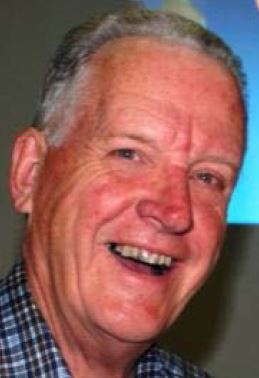 Peter Keith PHF gave an overview of the rapidly changing scene in General Practice over the last fifty years and the last ten years in particular. In that time, there were many complex and continuing challenges facing the Family GP.
From 1973-1979, Peter worked as a medical missionary doctor in Tanzania and then for 32 years, as an older style family GP in a large Christian-based group practice in Wagga from 1981- 2014.
Medical work in Tanzania was totally different to Australian general practice - much more basic, and incredibly challenging. He personally carried out 64 Caesarean section operations using spinal anaesthetic as well as a few emergency operations for which he was not trained. He trained village health workers and lived through major cholera and meningitis epidemics.
From the 60's to the 80's, general practice in Wagga was still traditional and largely without effective infrastructure and little or no formal connection with the rest of the Health System. Some GPs continued to work solo while most others worked in mainly Anglo-Saxon group practices of varying sizes. Increasingly, international graduates took positions in rural and remote practices as general practitioners. Beyond the cities, GPs still had significant access to hospitals as Visiting Medical Officers.
In 1990, Peter attended a summit in Canberra which discussed the Crisis in General Practice - the future of general practice, concerns about looming nationalisation, threats to vocational registration, accreditation and governments trying to push for Divisions of General Practice. The Australian Medical Association, as the bastion of mainly specialists and entrenched conservatism, was publically appalled and oppositional but a few moderates privately concurred and welcomed much needed reform.
In the early 1990's, Divisions of General Practice came into being. One of 112 such divisions, Wagga started in August 1993. Next came accreditation. Practices started to become more multidisciplinary. Training of GP registrars working in practices expanded with key GPs doing supervision and training.
In the 2000's, Regional GP registrars received better training from programs such as Coast City Country Training (CCCT). GPs were increasingly excluded from base hospitals. There was the threat of takeovers by large entrepreneurial clinics in many places but Wagga was spared. A unique and successful cooperative providing medical service after hours made after hours responsibilities far more efficient and life-style friendly. In Wagga, a veritable influx of Coptic Orthodox Christian doctors commenced. Fewer GPs did home visits and some gave low priority to servicing Aged Care facilities.
By far the biggest change to the operation of general practices was computerisation. It touched management, reporting, outcomes, prescriptions and record keeping. Practice- based ancillary services began to expand. As traditional GPs were ageing, it was getting harder to recruit GPs and specialists to regional and rural practices. Fewer GPs were prepared to carry out extra tasks within and beyond their practices or to undertake committee work or representation. The number of graduates from medical school seemed inadequate. International medical graduates faced uncertain futures as fewer seemed to be going into General Practice.
As the early years of the 2010s unfolded, CCCT was providing good training. There was a strong Coptic GP presence in several Wagga practices. The eventual development of Wagga Wagga Base Hospital was now very likely. Health Districts had changed yet again and Medicare Locals faced further rationalisation. Primary Health Care was part of the deal. Huge changes were affecting the pharmacy industry. Enormous political debate and unrest ensued over GP funding and co-payment issues. Record numbers of medical students were training but where would they get internships and who would train or supervise them and how many would go into General Practice, especially in regional, rural and remote practices.
As a boy growing up in Sydney, Peter did not remember being taken to a GP although his mother occasionally took him to the Royal North Shore Hospital. He remembered the smell of phenol or similar. His father was in Concord Repatriation General Hospital for about four years with pulmonary tuberculosis. Peter recalled listening to the memorable Jungle Doctor fables presented by Dr Paul White who had considerable radio fame in both the city and country NSW.
In conclusion, Peter commented that after providing some part time holiday relief at his former place of work, KRS Health from January to July 2014, he decided to fully retire. He is enjoying the tasks, opportunities and challenges he had envisioned in retirement. Like many retirees he doesn't know how he found time to work full-time in a busy medical practice!