Orange Daybreak
Orange Daybreak had a number of interesting Guest Speakers during February – notes from some of their speakers follow: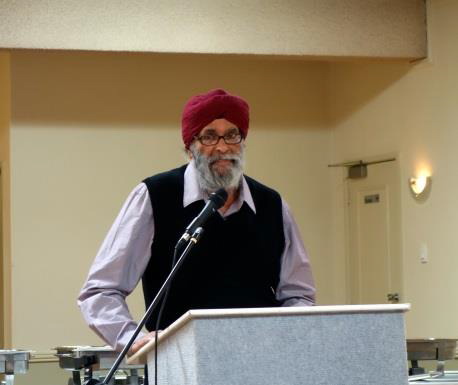
Ajmer Singh Gill was born in Singapore, raised in Malaysia, studied in England and worked in Malaysia before coming to Australia in 1981. He worked as an educator in such diverse places as Tennant Creek, Darwin and Western Sydney before coming to Orange to be closer to his daughter and her family. Ajmer is a practising Sikh. Sikhism is a way of life; a disciplined mode of life coupled with a belief in the unity of one God, the equality of all mankind, faith in the Guru's word and love for all. The stepping stone for a Sikh is to accept the one God and worship Him with one’s tongue, mind and actions. It is a peaceful faith which strongly believes in fairness to all i.e. upholding human rights and justice to all. Sikhs believe religion should be practised by living in the world and coping with life’s everyday problems.
Ajmer is currently the President of The National Sikh Council of Australia, an umbrella body of Sikh organisations (incorporated associations e.g. Sikh Youth of Australia). It represents the needs of the Sikh community in Australia, unites Sikhs around Australia, in prayer and service to humanity and enables them to be better members of the Australian Society. The Australian Sikh population is around 75,000 with the majority living in NSW.
Challenges & Issues being addressed by the Council include:
-
Wearing the Kirpan, a ceremonial dagger worn by baptised Sikhs, in public.
-
Wearing a Turban. There is a need for the wider Australian community to be more aware and tolerant and not discriminate against someone wearing a Turban and not assume that they might be a terrorist.
Ajmer is passionate about the work of the National Sikh Council, interfaith relations and gender equity. In 2005 he received the NSW Community Relations Commission Award for Community Service
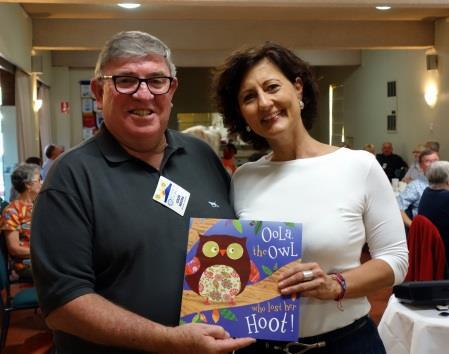 On 4th February, Kath Logan gave a presentation to Orange Daybreak about facilitative mediation, focusing on family dispute resolution and land access mediation. Her dispute resolution background is professional and academic. In addition to managing stakeholder relations and disputes in the mining, CSG and infrastructure industries for ten years, she has completed two Masters degrees in dispute resolution. She is also a nationally accredited mediator and an Attorney General accredited Family Dispute Resolution Practitioner. She works from the premise that dispute damages reputations and relationships, wastes money and time. In the country, people have to pull together.
Agreements that work let people work together productively, and spend their time and money on the people they love and the things they love doing. So mediation is an excellent option for country families and businesses in dispute.
The presentation focused on three main areas: 1. General mediation - principles and process 2. Family Dispute Resolution - process, protecting the rights of the child in every instance, Parenting Plans, effects of separation and divorce on children, ways that adults can protect children in high conflict families. 3. Landholder mediation for land access (mining, gas and infrastructure). Both parties have opposing needs and interests - making an agreement requires both parties to understand one another better. This is easier to do with the help of a third party.
Her talk wrapped up with five takeaway points that anyone can use to manage conflict effectively: 1. We are more similar than different 2. Listen 3. What are their needs and interests? 4. Separate people from problems 5. Hard on problems and soft on people For more information on mediation, visit Kath’s website www.kathlogan.com.au