Saving Mothers and Children
Posted by Michael Milston on Apr 16, 2017
 Why should Rotary have as a major area of focus, Saving Mothers & Children?
UNICEF gives some very pertinent statistics:
- In 2015, it is estimated that about 800 girls and women died every day as a result of pregnancy and child birth-related complications. Maternal deaths are now increasingly concentrated in sub-Saharan Africa, where high fertility rates combine with inadequate access to quality antenatal care and skilled attendance at birth to substantially elevate the risk of death in this region.
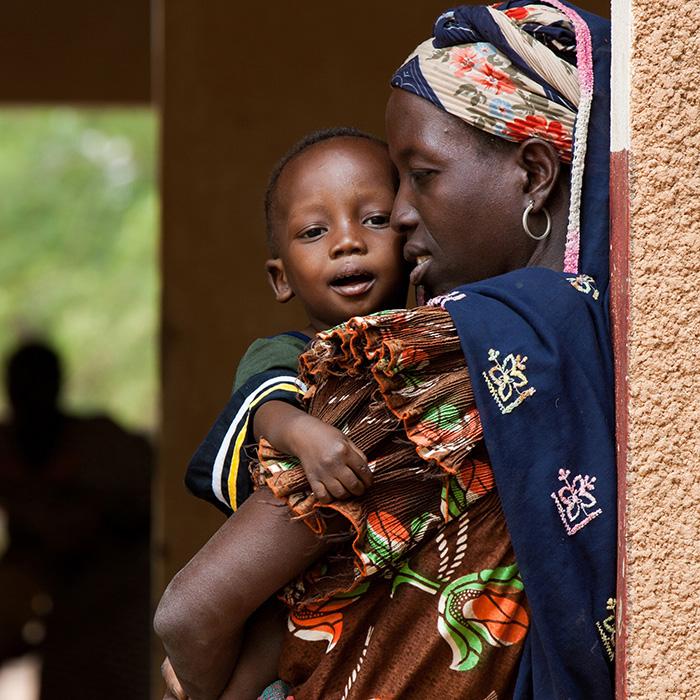 Antenatal care and skilled health attendance at delivery are essential for eliminating every preventable maternal death. The world, as a whole, has improved access to these services, with 71 per cent of women delivering with the support of a skilled birth attendant in 2014, compared to 59 per cent in 1990. This progress has not been fast enough.
- What is more, very substantial disparities exist in levels of access to services, with poorer, less educated women receiving unacceptably low levels of access to services.
- Women in the richest quintile are almost three times as likely to deliver with a skilled health attendant as those in the poorest quintile. This disparity has not changed in 15 years. Little progress has been made in closing the gap in antenatal care between urban and rural women.
- While the world has achieved impressive reductions in mortality of children aged under five since 1990, the survival of newborns (young infants in the first month of life) has lagged behind. It is estimated that in 2015, about 1 million newborns died, equivalent to 2,740 per day. A child born in 2015 was approximately 500 times more likely to die on the first day of life that at one month of age. The high burden of still births is also an increasingly recognized problem, with 2.6 million estimated still births in 2015.
So what does Rotary do through the funds we raise and donate to our Foundation?
Rotary makes high-quality health care available to vulnerable mothers and children so they can live longer and grow stronger.
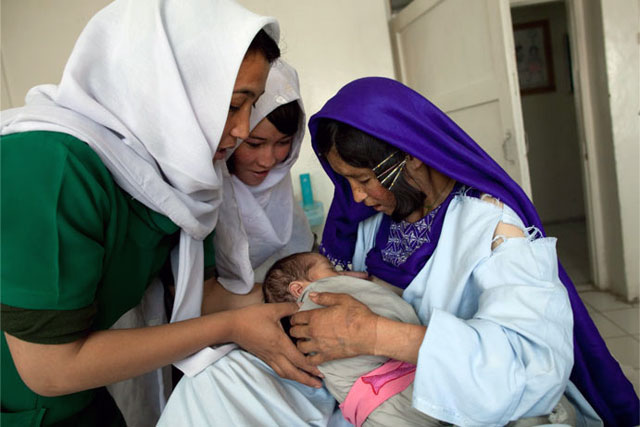
We expand access to quality care, so mothers and children everywhere can have the same opportunities for a healthy future. An estimated 5.9 million children under the age of five die each year because of malnutrition, inadequate health care, and poor sanitation — all of which can be prevented.
How Rotary makes help happen?
Rotary provides education, immunizations, birth kits, and mobile health clinics. Women are taught how to prevent mother-to-infant HIV transmission, how to breast-feed, and how to protect themselves and their children from disease.
Rotary provides education, immunizations, birth kits, and mobile health clinics. Women are taught how to prevent mother-to-infant HIV transmission, how to breast-feed, and how to protect themselves and their children from disease.
The Rotary Foundation reaches mothers and children in need by giving communities the help and training they need to take control of their own maternal and infant health care. Here are some examples:
Sustainable programs: Rotary programs improve women’s access to skilled health personnel: doctors, nurses, midwives, or community health care workers.
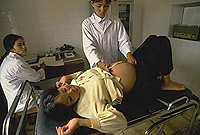 Mobile prenatal clinics: Haiti has the highest maternal and infant mortality rate of any country in the western hemisphere. Rotary provided a fully equipped medical Jeep to volunteers and midwives to reach mothers and children in remote areas.
Keeping children alive during their first year: Rotary members teach mothers how to breast-feed, promote immunizations and regular checkups, and distribute insecticide-treated bed nets.
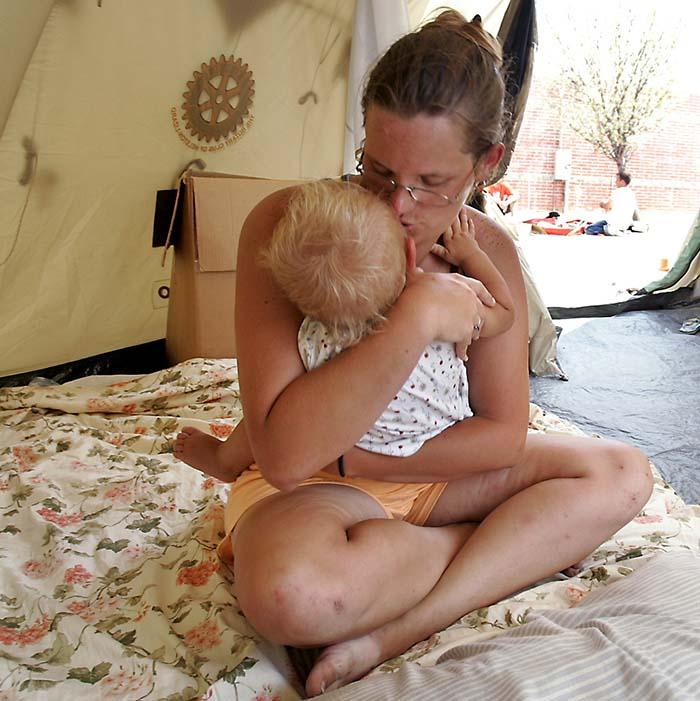 Clean births: Rotary members distribute clean birth kits and train health workers in safe delivery of babies.
Cancer screening: Rotarians provided a mobile cancer screening unit and awareness training around Chennai, India, where there is a high mortality rate of women with breast and cervical cancer due to late diagnosis.
Preventing injuries and deaths: Rotary members launched a $3 million, five-year pilot to save lives of mothers and children during home deliveries in Nigeria. Since 2005, they’ve also repaired 1,500 obstetric fistulas — 500 more than their initial goal — restoring dignity and hope to vulnerable mothers.
Sustainable programs: Rotary programs improve women’s access to skilled health personnel: doctors, nurses, midwives, or community health care workers.
Mobile prenatal clinics: Haiti has the highest maternal and infant mortality rate of any country in the western hemisphere. Rotary provided a fully equipped medical Jeep to volunteers and midwives to reach mothers and children in remote areas.Keeping children alive during their first year: Rotary members teach mothers how to breast-feed, promote immunizations and regular checkups, and distribute insecticide-treated bed nets.
Clean births: Rotary members distribute clean birth kits and train health workers in safe delivery of babies.Cancer screening: Rotarians provided a mobile cancer screening unit and awareness training around Chennai, India, where there is a high mortality rate of women with breast and cervical cancer due to late diagnosis.
Preventing injuries and deaths: Rotary members launched a $3 million, five-year pilot to save lives of mothers and children during home deliveries in Nigeria. Since 2005, they’ve also repaired 1,500 obstetric fistulas — 500 more than their initial goal — restoring dignity and hope to vulnerable mothers.
And of course there a number of Rotary Australia World Community Service (RAWCS) projects that focus, at least in part, on the improvement of health and access to better health care for women in villages around the world, for improved literacy which leads to improved ability to read and understand health posters targeted to mothers and young women, and of course the improvement of economic development will raise the status of women and their ability to afford health care and to care for their infants.
As Rotarians we can be proud that we are making a difference and serving humanity through these wonderful projects. Let's hope we can reduce the incidence of childhood and preventable maternal deaths.
If you wish to donate to the Foundation please go to this link: http://www.tarft.org.au/ and select Donate Now, then Annual Fund, then Annual Fund - Maternal and child health.